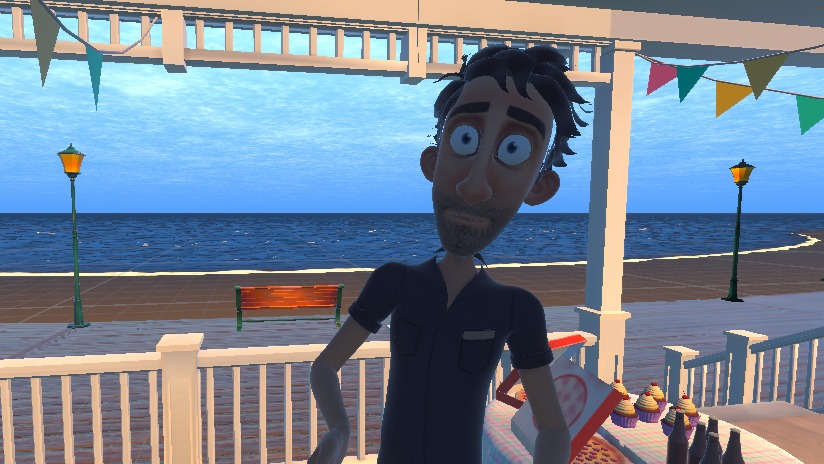
Anchored Memories
Five-act haptic VR story on climate migration · Unity lead and project engineer · UT Austin, 2026
- RoleUnity Lead · Project Engineer (independent partner, volunteer)
- Year2026
- EngineUnity
- PlatformVR + bHaptics TactSuit X40
- Team12+ (TXI, D2R Studios, independent partners, UT Austin advisors)
- ForTexas Immersive Institute, UT Austin
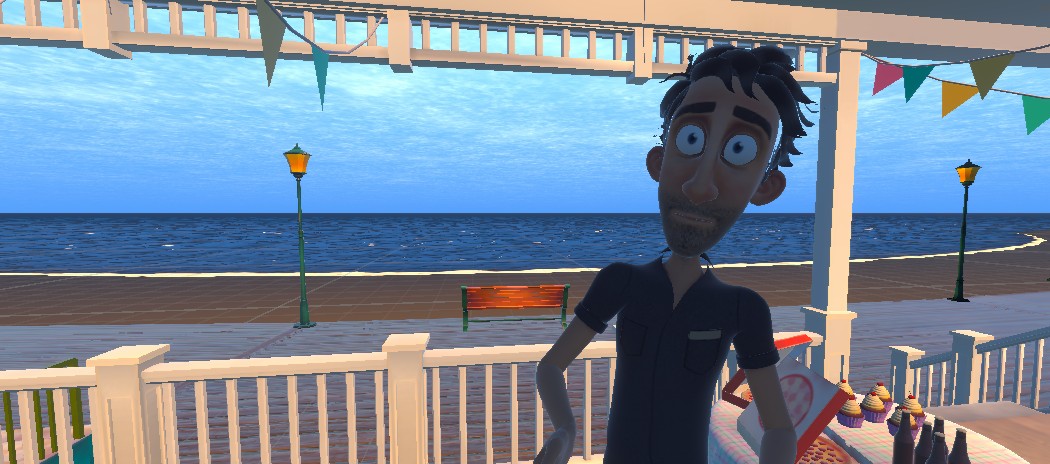
Behind the scenes of the AI-driven motion capture
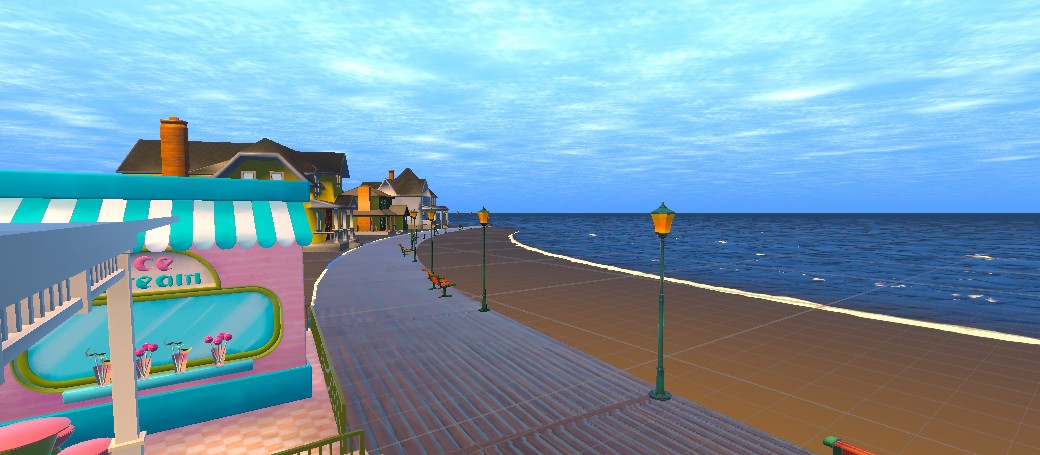
Unity work in progress, v01: an early build, about half a year before SIGGRAPH
Highlights
- Part of the design team on the technical side: chose the tech and approach for bringing Erin Reilly’s script and concept to VR
- Turned the five acts into a technical structure, with weather that mirrors hurricane categories 1 to 5 as the sea rises over the years
- Researched how to mimic each storm level, then gave every act Inspector controls for the sea and other elements, so the team could shape the weather without code
- Set the project up so students new to game development could step in and contribute quickly
Leadership
- Moved the project from Unreal to Unity when I joined, to lower the deadline risk on the program’s first big project with outside partners and reach the July 2026 showcase
- Main developer on the levels for part of the project, and on call as backup throughout the year
- Part of the planning team: kept the GitHub project board in order, helped divide tasks around weekly check-ins, and onboarded the students into the project
Overview
Anchored Memories is a haptic VR story about climate-induced migration in Central Texas, made at the Texas Immersive Institute (Moody College of Communication, UT Austin). I was its Unity lead: I engineered the project’s foundation and set up the five acts the team built on.
It plays like a small visual novel told through sound instead of text. A voice guides you through five chapters of a girl’s life with her dad and their home in Texas, where the sea rises over the years and hurricanes grow stronger. The story flows on its own; when the scene asks for it, a VR interaction is your cue to move on, while spatial audio and a full-body haptic vest make each storm something you feel. A research layer pairs the experience with biometric feedback.
It was shown at SIGGRAPH 2026 and continues as a prototype for festivals and museums.
Technical deep dive
Why Unity
The team originally planned to build in Unreal Engine. When I joined as Unity lead, as an independent partner working alongside D2R Studios, we moved the project to Unity, the engine I know best. It was the program’s first big project with outside partners, and like any student project it was also a place to learn, so the timeline carried real risk. Unity let me set up a solid base quickly, so the team could build on it toward the July 2026 showcase.
How the acts are built
Erin Reilly wrote the script and the core idea; my part was turning it into something the team could build, and most of the project’s engineering concept is mine. The five acts are five moments in the family’s life, and their weather mimics hurricane categories 1 to 5, one per act. I studied what we could use to recreate each storm level, then set up every act as its own space with an environment ready for the ocean changes, for the team to fill in with level design. I left notes for the team and prepared objects that expose the sea and other elements in the Inspector, so most of the changes from act to act are settings, not code, and the concept stays consistent as the team works on it.
Built for an interdisciplinary team
The team brought together researchers, sound and haptics designers, 3D artists and students from many backgrounds, many of them new to game development. Learning was part of the goal, so I kept the base simple and well laid out so that anyone could open an act, see where things go and start contributing. I onboarded the students, kept the GitHub project board in order, was part of the planning team (helping divide the work around weekly check-ins), and lent assets from my own Unity Asset Store library, where licenses allowed, so the team had more to choose from.
Story graph
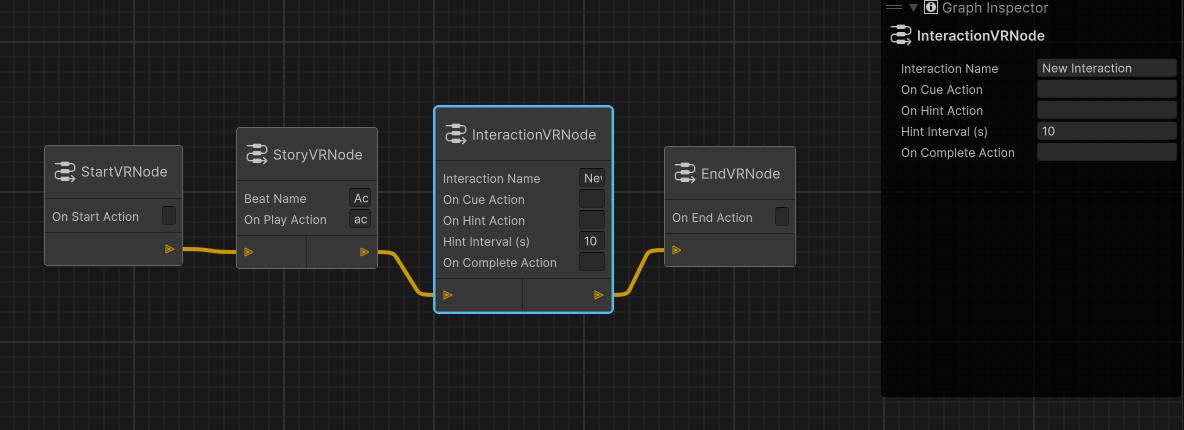
To let students build the experience without writing code, I built a node-based story graph on Unity’s graph tooling, which at the time wasn’t yet built into the editor; you had to know it existed. A chapter is a chain of nodes: a start, story beats that play their action, VR interactions with a cue, timed hints and a completion action, and an end. Each node exposes its events in the Inspector, so the team could wire up a chapter visually and focus on the story.
What I built
- The node-based story graph for sequencing story beats and VR interactions
- The barebones architecture and the base code for VR interactions and audio
- The structure of the five acts, ready to be worked on separately
- Help integrating the haptics designer’s bHaptics SDK work
- Shaders (including the sand) and rain particle effects with optimization tests
- Asset import and configuration, including the ocean
Toward the showcase
I was on call as backup throughout the year, and near the showcase I helped test the release build on my own VR headset.
Team
Erin Reilly (Creative Director, Researcher) · Jackson Alexander (Technical Director, Sound) · Maxfield Friedman (Unity Developer) · Han Xu & Maggie Rembert (3D Modelers) · Thomas Ybarra (Haptics Designer) · Jordan Prather (Admin) · Pedro Loures (Unity Lead, independent) · Arthur Furtado (D2R Studios, 3D Animation) · Shane Reilly (MoCap, Voice of Father) · Advisors: Dr. Keri Stephens, Dr. Joseph Dunsmoor, Dr. Alyssa Roeckner
Images
Links
Like this project? Get in touch or connect on LinkedIn.